Since November 2024, people have created more than 70 million projects with Lovable. Inside companies, many of those projects sit next to Salesforce: a pipeline view a sales team wanted, or a deal desk that matched their approval rules. Until recently, each one meant a ticket to IT or a consultant, because Salesforce was a set of screens you logged into.
This year Salesforce opened the platform. Headless 360 exposes every Salesforce capability through APIs and MCP servers, with Salesforce's own identity, permissions, and compliance still in charge.
That's why we're working with Salesforce so the apps and agents people build with Lovable run wherever their team already works.
How it works
Lovable connects to Salesforce in four ways.
Headless 360
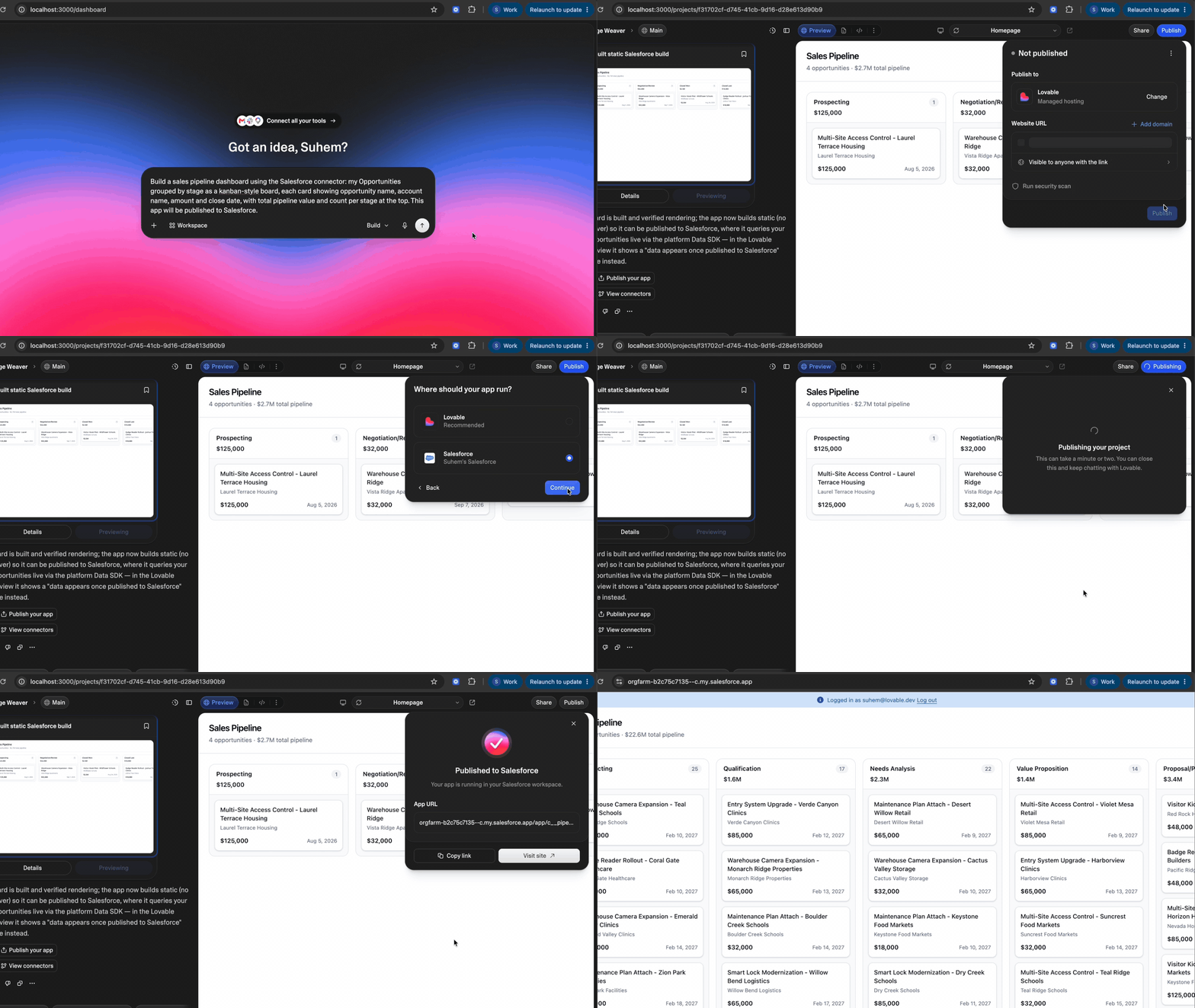
Headless 360 works in both directions. Apps built with Lovable read and write Accounts, Contacts, Leads, Cases, and Opportunities through it. Each person connects their own Salesforce account, so everyone sees only what your sharing rules allow. And for the views your team opens every day, pick Publish to Salesforce when you connect. Lovable builds the app to run inside Salesforce, and Publish puts it in your org as a page that reads live data as each person. Today that covers read-only apps like dashboards and pipeline views. Apps that write back run on Lovable through the connector.
Every request from an app built with Lovable passes through Salesforce's identity and permissions, so there is no second copy of the data and no second login.
Lovable in Slack

Mention @Lovable in a channel or a direct message and describe the app your team needs in plain language. Lovable builds it from the channel, posts the result back in the thread, reads your workspace, and works with your connectors. Nobody has to leave Slack to get software built.
Slack Code
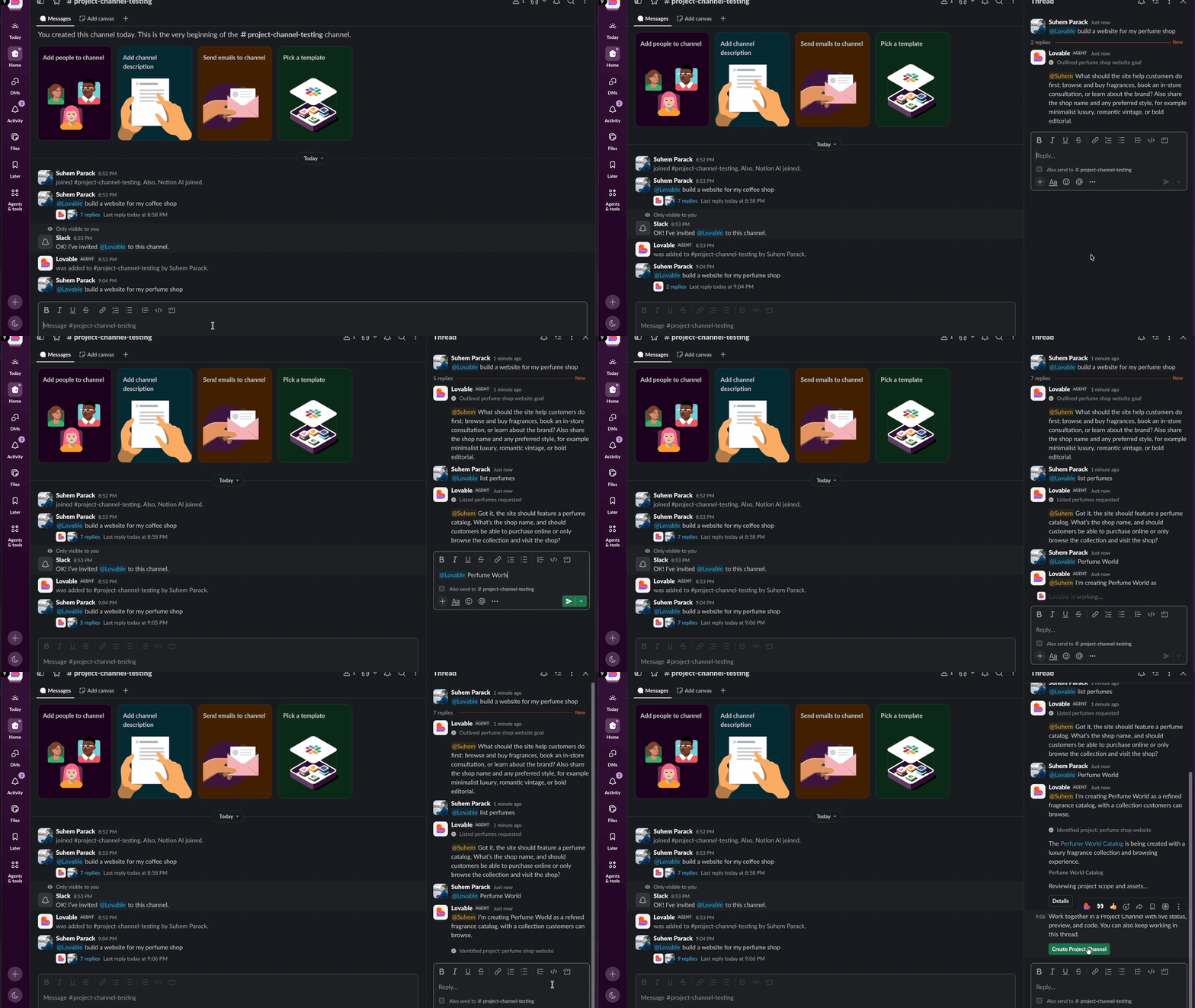
When more than one person needs to work on a build, it opens in a code channel. Sales ops, finance, and the rep who asked for it shape the app together, in the same thread, on one shared version. Slack built Slack Code to bring tools like Lovable into Slack for this kind of work.
Agents your team installs into Slack
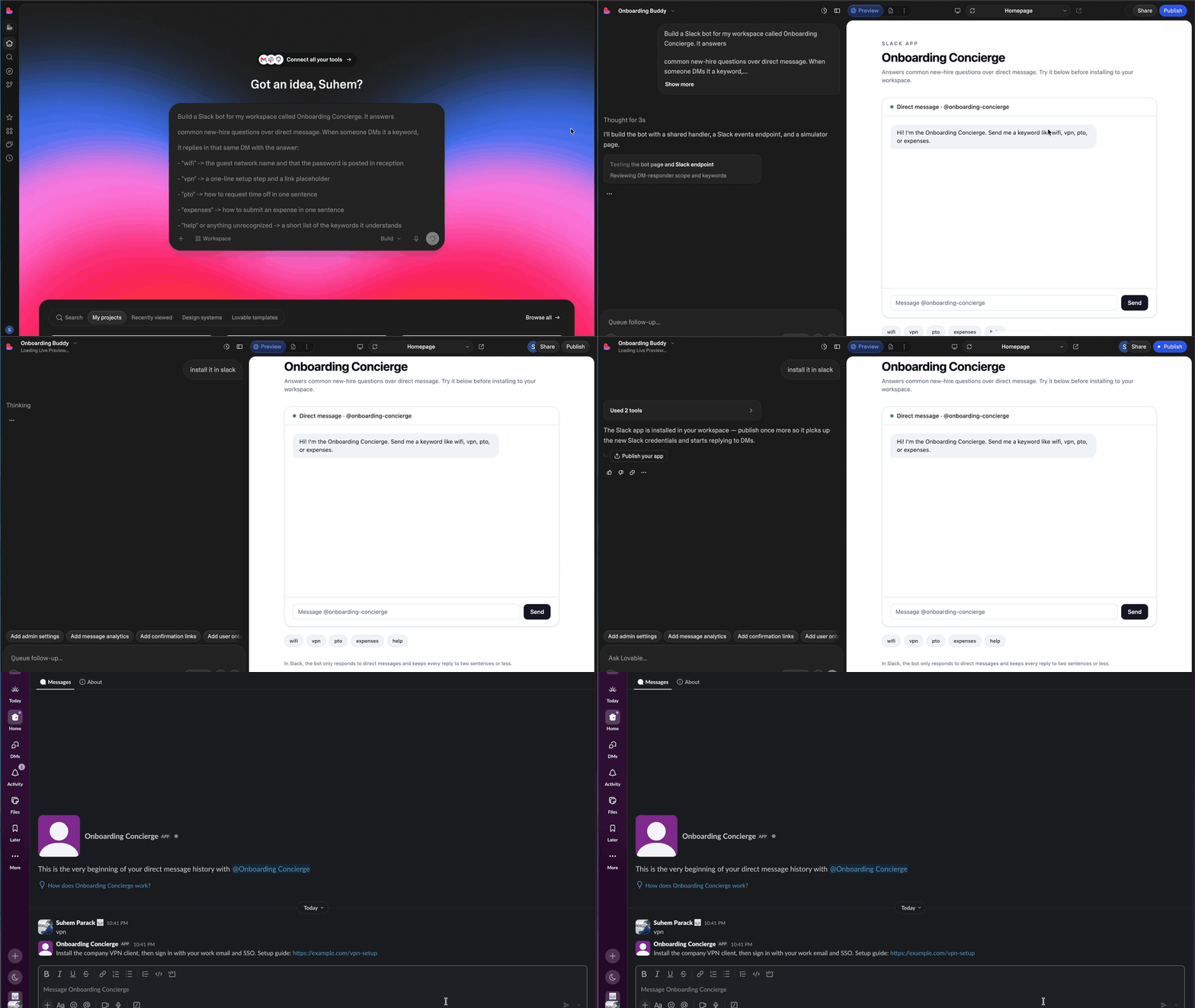
Describe an agent, test it, and install it into your Slack workspace as its own bot, in one step. An admin connects the workspace once. After that, Finance can approve a quote from the deal channel, or a rep can ask the account bot what changed overnight.
What it means for you
A rep moves a deal to Proposal in Salesforce. The app your team built sees it instantly, with the rep's permissions. It adds the pricing rules and usage data Salesforce doesn't hold, and posts the quote to the deal channel. Finance approves it in Slack. Salesforce gets the result back, and reporting, forecasting, and Agentforce all see the same record. Nothing gets copied. Nothing gets re-typed. You have one record, everywhere.
For IT, the data never leaves. The code is real code with version history that your engineers can open. The controls are the ones you already run: SSO, SCIM, security scanning, audit logs, and connectors approved once.
Every company has its own way of working. Through Salesforce's headless toolkit, Lovable lets customers describe what they need in plain language and turn it into a working application or agent, powered by the Salesforce data they already trust. Salesforce remains the system of record; Lovable gives teams a new way to build and work with it.
— Lan Roche, Head of Global Partnerships, Lovable
Lovable is changing how quickly ideas can become real applications. Through the Headless Toolkit and AgentExchange, we're making it possible for builders to connect those experiences to Salesforce data and business context, while giving our shared customers a trusted way to build and deploy a new generation of AI-powered solutions.
— Tyler Carlson, SVP, Head of Product AgentExchange & Ecosystem, Salesforce
Everything above is available today. Connect Salesforce from your Lovable workspace and pick the first app.