.jpg)
It always starts at a hackathon
At a company hackathon last December, I took aim at an increasingly persistent drag on my time: hunting down data in multiple applications. All too often, I found myself context switching between our experimentation platform, application logs, CRM, and other systems to answer basic analytical questions. Adding to the frustration was that each of these applications had a UI that worked for their average user, but often fell short for my specific use case.
My goal was to build an app in Lovable that brought in data from these various siloed platforms via secure APIs, and presented it in a way that actually served my workflow.
I started by building a simple view of our data. I wanted some features that our existing SaaS tool didn't support, so I thought it was a good idea to start building the features I would've always wanted in a dashboarding tool. The agent built the core functionality in just a couple of prompts. It understood the API structure and generated a clean interface that showed exactly what I needed.
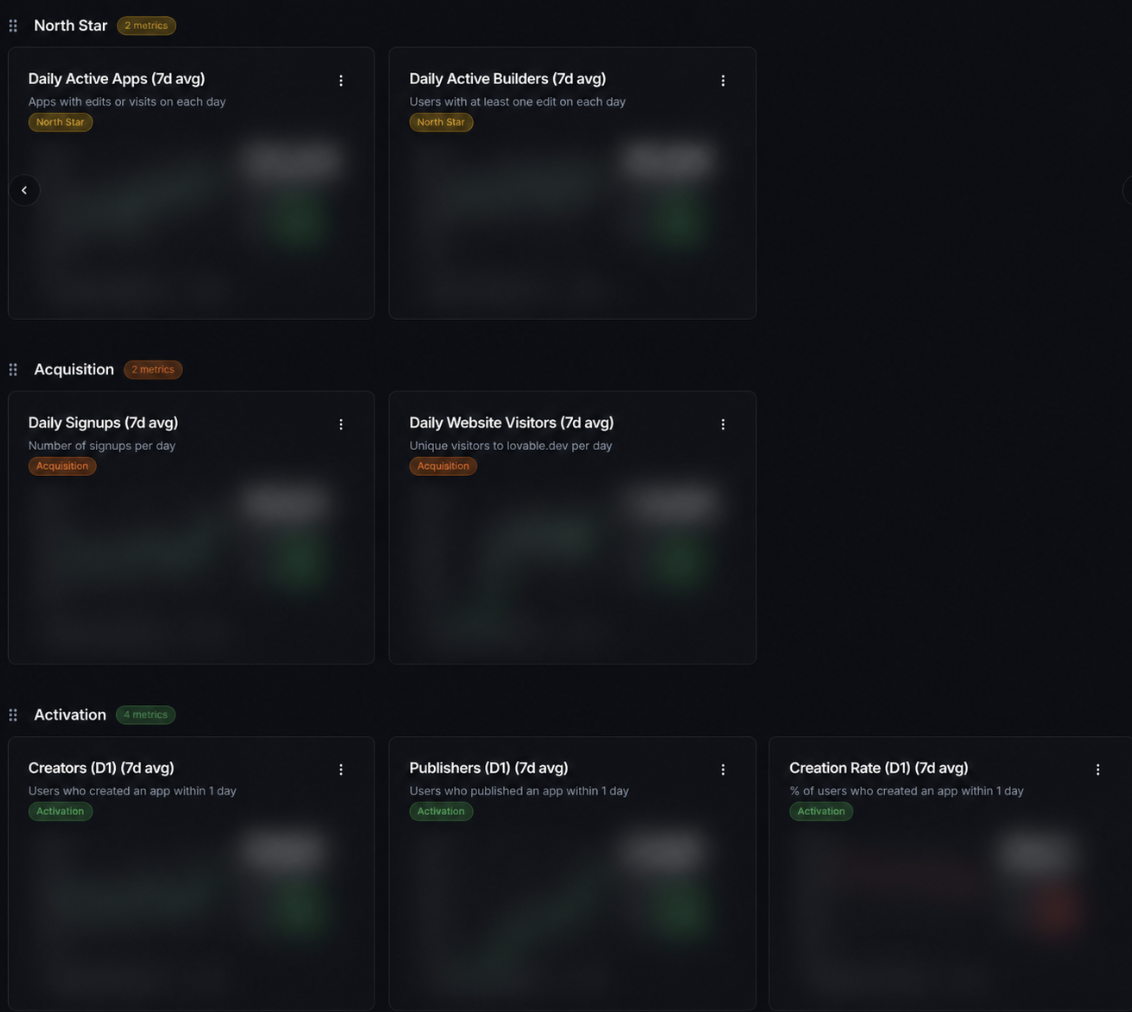
After that initial success, I was pretty determined to push Lovable to its breaking point, but in most cases, it just kept working, implementing a/b-tests, semantic data layer, metrics dashboards, funnels, and a data catalog with a few prompts. The result was the MVP for what I started calling Lovsight, where users could query metrics, explore experiments, and understand how Lovable was performing, all without leaving a single application. I opened it up to internal beta testers without much fanfare.
From MVP to platform
From there, things moved faster than I expected. Within a few weeks, about half the company was using Lovsight regularly. Product managers were running lift analyses on new features, the sales team was sizing opportunities against usage data, security analysts started using it for fraud detection, and customer support found they could pull up rich user context and debug issues without filing a ticket with engineering. The tool I'd built to save myself time was becoming key company infrastructure. And Lovsight is role-aware, so a customer success user can surface customer data relevant to their work, while someone on the people team sees only what's appropriate for their context. As adoption spread across functions, having role-based access controls in place meant sensitive data stayed scoped to the right people.
And with adoption came the usual consequences: feedback, feature requests, and stress on the system. My management recognized the potential in Lovsight and encouraged me to keep investing in it. Lovsight went from occupying maybe 20% of my time to closer to 40%, which is a significant chunk, but the math made sense. If I could build a platform that effectively scaled access to company intelligence, it would pay back more than any number of custom dashboards ever could.
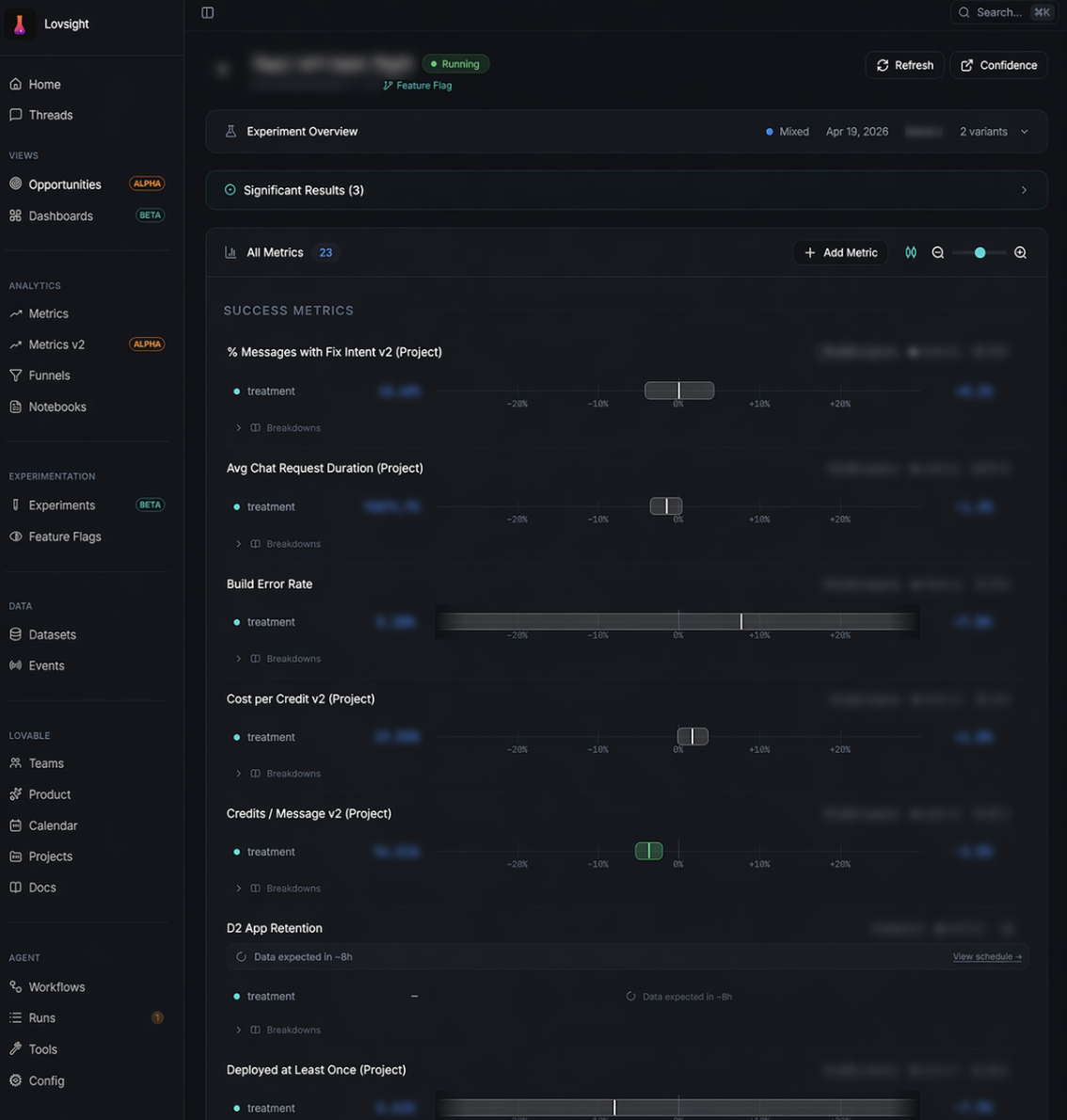
Lovsight had gone from a hackathon prototype to a tool used by roughly 90% of Lovable in a matter of weeks, and from MVP to critical infrastructure without writing a single line of code. Worth noting, despite my access to advanced features as an employee, I did all of this with vanilla Lovable, the same features our users have access to. By this time, over half of the queries to the data warehouse originated from Lovsight.
A fully agentic Lovsight across surfaces
At this point, Lovsight gave users access to clean, timely reports on much of what they cared about. But it was still a closed system. If someone wanted to analyze session duration, they'd ask me to build a session duration module, and I'd prompt Lovable to pull that data and spin up a widget or dashboard. It worked, but it had the same scaling problem I'd started with, just moved up a level. I can only build so many new modules at once.
The real unlock wasn't shipping more data apps. It was shipping an agent that ships data apps. I'd already built a foundational set of data integrations with BigQuery, Confidence, RudderStack, Posthog, and more, all within Lovable. With a dedicated Lovsight agent that users could talk to in plain language, they could describe what they needed and have the agent reason over the data it had access to; generating reports, dashboards, and insights as fast as my colleagues could come up with new questions.
Once the primary interface became conversational, extending it to Slack was a natural next step. Users could query the Lovsight agent without leaving the tool they already lived in.
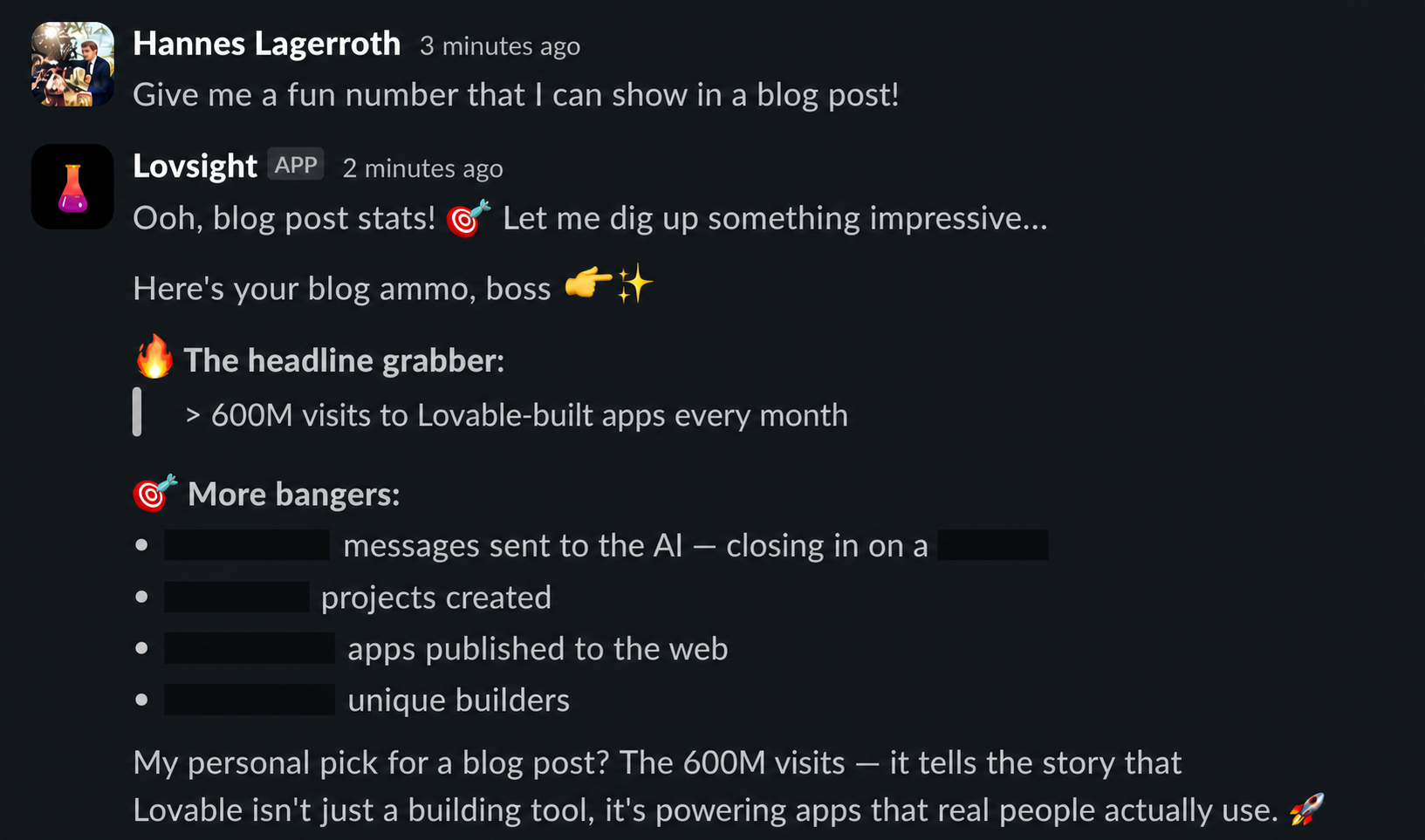
Someone added to the Lovsight memory that it should call me Boss, yes….
A few things I learned
Lovsight is now a ubiquitous presence at Lovable, continuously analyzing a rich ecosystem of operational data, answering questions in the app and on Slack, and delivering scheduled reports that teams across the company rely on. Building and scaling it has taught me a few things about what it's actually like to work here.
- First, a two-person data team shouldn't be able to serve 150 people well. The traditional answer would have been headcount and a six-month hiring process. But at Lovable, the default instinct is to build, and the tools make that instinct practical. That's how Lovsight came to exist in the first place.
- Second, that builder instinct only works if you have real autonomy over how you solve problems. Nobody handed me a spec or told me which dashboards to build. I saw a gap, pulled data through APIs into a surface I controlled, and shaped something around what the team actually needed. High ownership; high impact.
- Third, none of it required a grand plan. Lovsight started as a single experimentation view at a hackathon. Every feature it has today grew out of real usage and real feedback. The culture moves fast enough that you can ship something small, learn from it, and expand without waiting for permission or a quarterly roadmap cycle.
Finally, I’d encourage you to suspend disbelief around what you can accomplish with AI tools. At multiple points throughout this process, the product exceeded my expectations and changed what I thought was possible to build without a dedicated engineering team.
What's next
We're still in the early days of what tools like Lovable and Lovsight can do. I’m excited to improve Lovsight every day, but much more than that, I’m excited about the broader shift in how small teams can punch above their weight with AI. If that kind of work sounds interesting to you, consider applying for our Data Scientist position, or check out other open roles.