For AI-native companies like Lovable, shipping velocity is fast.
What used to be quarterly Tier 1 launches are now monthly. In between those, we have weekly, sometimes daily, releases. Some are small improvements. Some are experiments. Some turn into bigger bets faster than expected.
And while product velocity has 10x’d, most of the product marketing systems haven’t.
PMMs are still:
- Piecing together scope from Slack threads
- Waiting on updated PRDs (or updates from PMs as PRDs are dead x)
- Rebuilding roadmap views for execs
- Starting asset creation too late because priorities weren’t clear early
- Reacting to launches instead of shaping them
At a certain pace, the friction becomes structural and we wanted a way to run launches that matched how we built and ship. Fast, iterative, and often in parallel, without introducing heavy process or documentation overhead.
What we built
We built a product launch roadmap inside Lovable that connects directly to Linear.
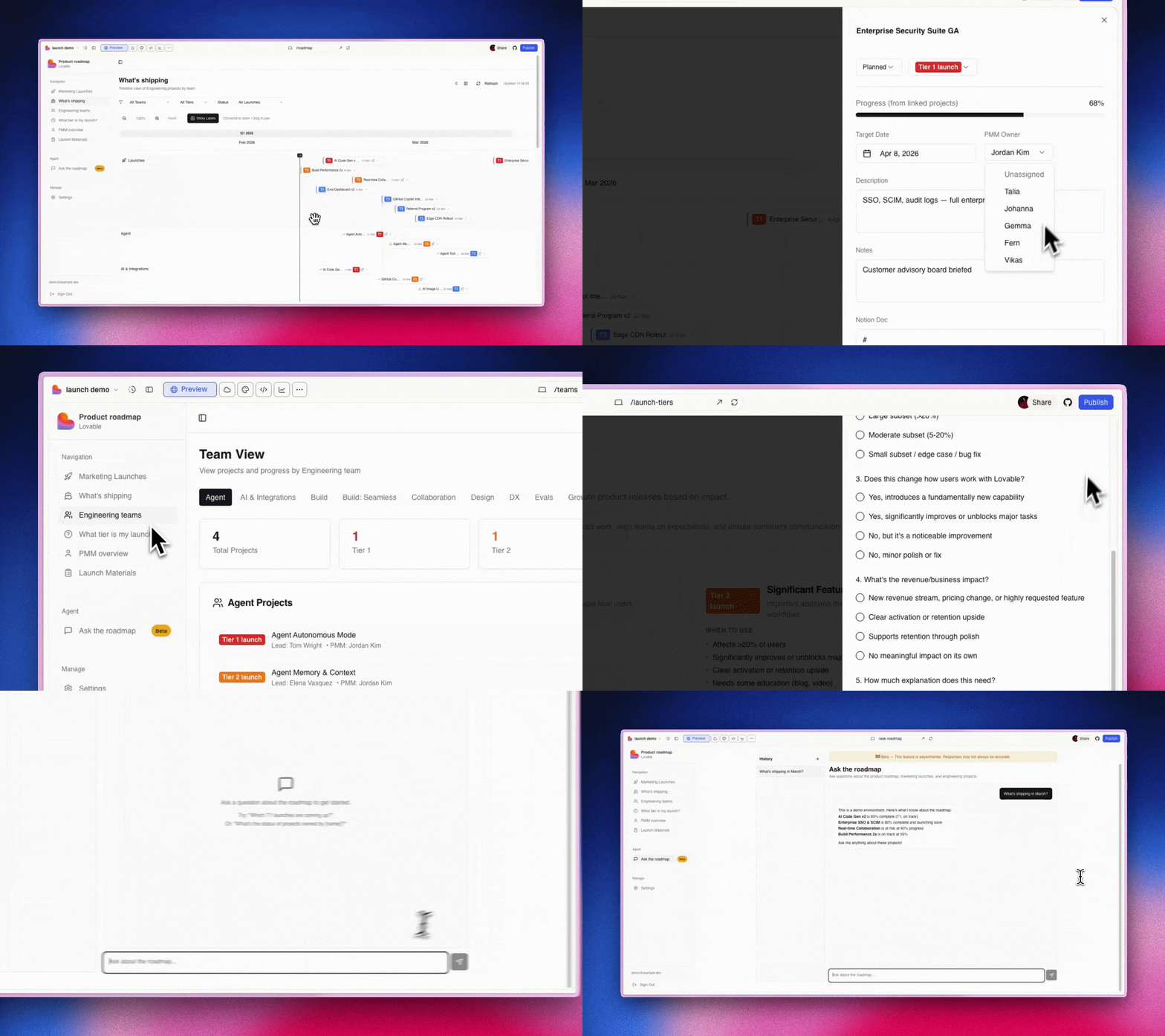
Every launch lives in one place. When you open it, you can see:
- The associated Linear project
- The engineering team responsible
- The launch date
- The assigned tier
- The PMM responsible
That sounds simple, but the value is in having it all visible at once and tied to the source of truth in Linear, with clear dates assign to launches.
If something is shipping, you can see:
- When it’s expected to go live to customers
- Who owns it
- What level of support it’s getting
- Whether it’s a meaningful release or small update
Previously, answering those questions meant checking Linear, Slack, a doc, and sometimes just asking around. Now it means opening a single Lovable app.
Tiering & bill of materials
We tier every launch before any marketing work begins.
The PM and PMM assign it together when the launch is being scoped. That forces a conversation early, while the feature is still being defined.
If there’s disagreement, we use three questions to guide the discussion:
- Does this affect a majority of users or open a new market?
- Does it require education to understand?
- Would we regret under-investing in it?
If the answer is yes to most of those, it’s Tier 1 or 2. If not, it stays lower.
We try to be disciplined here. Over-tiering creates noise and spreads resources thin. Under-tiering limits impact and creates downstream regret. Both have real costs.
Each tier maps to a defined rollout and bill of materials (which has it’s own tab in our launch tracker).
Tier 1 example materials
Company-defining moments that reshape how users experience Lovable.
- Dedicated landing page
- Coordinated launch date
- Coordinated campaign
- Blog post
- Socials
- Video
- Press
- Influencer outreach
- Paid
- Sales enablement materials
- In-app education
Tier 2 example materials
Important additions that substantially improve users workflows.
- Blog post
- Socials
- Changelog
- Sales enablement materials
- In-app education
Tier 3
Enhancements to the product expeirence that impact less than 20% of users.
- Changelog entry
- Optional light amplification
Tier 4
Small fixes or polish.
- Bundled into weekly changelog
This mapping removes ambiguity. Once something is Tier 2, for example, there’s no debate about whether it “also needs” a landing page. The scope is predefined and the peanut gallery can pipe down.
Sometimes something small grows in importance. When that happens, we re-tier it. The scope of work updates immediately because it’s tied to the tier.
‘Ask the roadmap’
The beauty of having everything structured in one place is that it becomes queryable. So we built a simple feature called ‘ask the roadmap’.
Instead of scanning for what you need, you can ask questions like:
- When is X launching?
- Is Feature Y Tier 1 or Tier 2?
- What’s shipping this month?
- What B2B launches are coming in Q2?
- Who’s the PMM on the analytics release?
- Do we have anything major going live next week?
This has been especially useful for Sales and leadership, although one practical lesson: if you build something like this, add clear tags for what is externally shareable versus internal-only. Once information becomes easy to query, it also becomes easy to repeat. Being explicit about what can and can’t be spoken about avoids accidental oversharing.
What changed
The main change is that launches are now concrete and visible earlier.
We run a weekly meeting across PMs and PMMs where we review the launch roadmap together. We look at what’s been added, what’s changed, and whether anything needs to be re-tiered.
Because tiering happens earlier, marketing work starts earlier. That doesn’t mean we suddenly have long timelines — Tier 1 can still mean 1–3 weeks of lead time — but it’s intentional time, not last-minute scrambling.
When someone asks about the roadmap, whether it’s Sales, an exec, or another PM, we can open the app and answer clearly:
- What’s shipping
- When
- With what level of support
Before, those answers depended on memory and context. Now we made launches explicit enough that they don’t live in Slack threads or someone’s head.
We’re working on building a template library. If this is a template you’d be interested in remixing, request it here: https://request-a-remix.lovable.app/
This was built by a PMM and PM, no engineers involved.