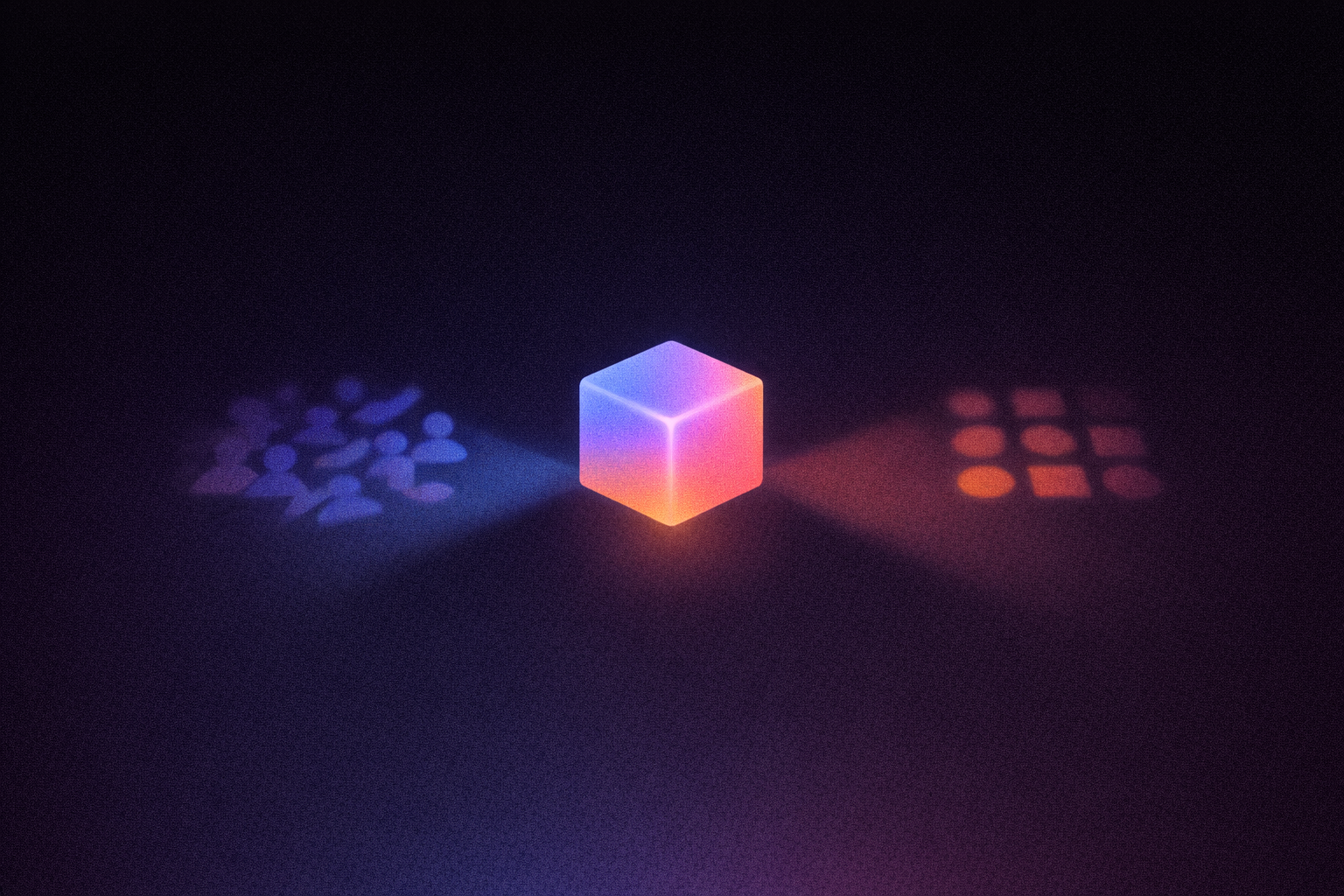
Midjourney's evolution from a Discord-only tool to a dual-platform ecosystem represents a fundamental shift in how AI image generation balances community collaboration with solo creative work. For years, every prompt, every variation, and every upscale happened inside Discord chat channels. Now creators can choose between a chat-based interface built for real-time community interaction and a browser-based workspace designed for focused, visual editing.
The question of MidJourney Discord vs Website matters because platform choice directly shapes how efficiently you create: from first prompt to final deliverable. Both platforms use the same AI models and produce identical image quality, so the decision comes down to workflow fit: how you prefer to generate, edit, organize, and collaborate.
Midjourney on Discord: Command-Driven Creation in a Living Community
Discord remains Midjourney's original home, and its text-command interface provides users who invest in learning its syntax with powerful control and flexibility.
Core Generation Workflow
Everything starts with the /imagine command. You type a text prompt, append parameters like --ar 16:9 for aspect ratio or --stylize 750 for artistic interpretation strength, and the bot returns a grid of images directly in the chat channel. From there, button clicks trigger upscales, variations, and remixes without leaving the conversation. The Discord command list includes specialized tools like /blend for merging multiple images and /describe for reverse-engineering prompts from uploaded images, providing learning opportunities and helping maintain style consistency.
Community Learning Environment
The community dimension sets Discord apart. Public channels display thousands of generations from other users in real time, creating a passive learning environment where you absorb prompt techniques just by scrolling. Thread-based discussions let teams iterate on specific images, and emoji reactions provide quick feedback: a star to favorite, an envelope to send results privately for confidential client review. According to Midjourney's Discord overview, the platform supports specialized channels for different user levels, dedicated support channels, emoji reactions for workflow actions, and real-time sharing across team members.
Command Syntax and Power Features
For power users, Discord's text-based interface enables rapid iteration through copy-paste prompt modifications. You can tweak a single parameter, hit enter, and immediately queue another generation without navigating menus. The Remix feature lets you modify prompts during variation generation, which is critical for incorporating team feedback on the fly. And the --repeat parameter, documented in official repeat documentation, generates 2–40 image sets from a single prompt depending on subscription tier (Basic: 2-4, Standard: 2-10, Pro: 2-40), creating the closest thing to batch processing available on either platform.
Organizational Limitations
The trade-off is organizational friction. Unlike the website's integrated folder system, gallery view, and drag-and-drop image organization, Discord-based creations live inside chat history, mixed with conversations, bot responses, and other users' generations. Finding a specific image from three weeks ago means manually scrolling through channel logs or relying on Discord's basic search function.
Midjourney on the Web: Visual Editing in a Focused Workspace
The website provides a purpose-built creative environment where every feature is designed around visual interaction, with integrated editing tools that eliminate the need for separate text commands that Discord requires for each editing function.
Midjourney's web platform is structured around three core areas: the Create page for generation, the Organize page for asset management, and the Editor for refinement. The Imagine Bar accepts the same text prompts as Discord, but adds drag-and-drop functionality for reference images and visual parameter controls that replace memorized command syntax. Your creation feed shows all generation progress simultaneously, and hover actions let you trigger variations, favorites, or deletions without additional clicks.
The Integrated Editor
The web editor represents the platform's most significant differentiator. Midjourney's editor documentation describes nine distinct tools consolidated into a single canvas interface: Remix for prompt iteration on existing images, Vary Region for selective inpainting, Pan for directional canvas expansion, Zoom Out for outward expansion, Move/Resize for repositioning elements, Paint tools for erase and restore functions, Smart Select for intelligent selection, Retexture for texture modification, and multiple export options.
Asset Management and Organization
The Organize page solves Discord's biggest weakness. Official documentation describes a purpose-built system with folder-based project organization, bulk actions for multi-image operations, advanced search by prompt text and parameters, and filtering by personalization profiles, dates, and attributes. Image grids are automatically separated into individual files, and all generation metadata is preserved. The Transitioning to Web guide also highlights web-exclusive features including Rooms for collaborative creation, Personalization Profiles for consistent brand aesthetics, Moodboards for client presentations, and Conversational Mode for AI-assisted prompt writing.
Head-to-Head: MidJourney Discord vs Website Across Five Dimensions
Both platforms produce the same output quality; the differences live in how you get there.
Interface and Learning Curve
The website's visual controls lower the entry barrier significantly. Some UX analyses and user reports point to Discord navigation as a primary pain point for beginners, especially command syntax memorization, difficulty locating images in fast-moving channels, and the overwhelming experience of crowded chat environments. The website addresses these friction points directly: drag-and-drop image references replace URL copying, visual controls eliminate command syntax requirements, a private workspace enables focused experimentation, and folder organization simplifies asset management compared to Discord's linear chat flow.
Expect 2–4 hours to reach basic competency on the website. Discord requires a similar initial time investment for navigation comfort, plus an additional 1–2 weeks to master prompt syntax through community observation. Educational resources recommend beginners start with the web interface for the first two weeks, then gradually incorporate Discord from week three onward for community learning and advanced features.
Power users often prefer Discord's text input because command syntax execution is faster than navigating visual menus, and editing a parameter means typing a few characters rather than adjusting sliders. The learning curve inverts at the advanced level, where command fluency outpaces point-and-click navigation for rapid iteration.
Image Generation Features
Both platforms access the same model versions, support identical parameter sets, and produce the same image quality. The Web vs Discord comparison confirms feature parity for core generation parameters: aspect ratio, chaos, stylize, quality, negative prompting, seed values, and version selection. However, the approach differs significantly: the web interface provides visual controls like sliders and dropdowns, while Discord requires manual text-based parameter syntax.
Discord users type --ar 16:9 --s 750 --chaos 25 as text appended to prompts. Website users access these same controls through dropdown menus, sliders, and visual presets. The web interface also supports drag-and-drop for image prompts and style references, while Discord requires pasting image URLs.
One notable gap: the Web vs Discord documentation notes that some advanced features, including custom suffixes and certain option sets, remain Discord-exclusive. New experimental features have historically appeared on Discord before the website. The web platform achieved full public availability in August 2024.
Editing and Refinement Tools
The web editor pulls ahead here by consolidating editing capabilities into a unified visual canvas. While both platforms support core features like Vary Region (inpainting), Pan, Zoom Out, and Remix, the website integrates these alongside additional web-exclusive tools. Per editor documentation, the web-exclusive tools include Repaint (selective element removal and restoration), Move/Resize (direct visual manipulation), Smart Select, Retexture, and Export Options. These tools let you make compositional adjustments that would require full regeneration through Discord commands.
Discord's editing workflow relies on button clicks beneath generated images and parameter adjustments in follow-up commands. It works, but each edit is a separate interaction rather than part of a continuous canvas experience. Professional designers frequently export Midjourney outputs to tools like Adobe Photoshop for final refinement, though the web editor's integrated tools, including inpainting, Pan, Zoom Out, and Move/Resize, reduce the need for some external editing workflows.
Community and Collaboration
Discord's real-time community interaction enables team members to watch each other's generations in shared channels, provide immediate feedback, and iterate within threaded discussions. The website platform, by contrast, prioritizes private workspace design with asynchronous interaction through organized galleries and folders. For professionals seeking real-time collaborative feedback loops, Discord's channel-based architecture creates a synchronous environment where immediate iteration occurs within community spaces. The Community Guidelines establish a framework for constructive critique that sustains professional collaboration standards across these public Discord channels.
The website offers Rooms as collaborative spaces, along with Moodboards and Personalization Profiles for team alignment on aesthetic direction. These features support asynchronous collaboration suited to client presentations and portfolio curation rather than real-time brainstorming.
Privacy splits along predictable lines. Website workspaces are private by default, while Discord generations in public channels are visible to everyone. Both platforms support Stealth Mode for complete privacy, requiring a Pro or Mega subscription, which is a critical requirement for professional client work on either platform.
Automation and Integration
Midjourney's official documentation confirms that no API documentation, developer portal, or programmatic access exists for either interface. Both platforms are designed exclusively for manual human interaction. Discord's bot architecture allows unofficial automation through third-party services like ImagineAPI docs and Make.com integrations, but these operate outside Midjourney's official support and carry Terms of Service compliance risks.
Both platforms support the --repeat parameter for batch processing (scaling by subscription tier as noted above) and multi-prompt {} syntax, though both require manual prompt entry. Beyond that, production-scale automation remains an unsolved gap in Midjourney's ecosystem regardless of which platform you choose.
Matching Platforms to Your Creative Workflow
The right platform depends on how you work, not on which platform has more features.
Solo artists and independent creators benefit most from starting on the website. The private workspace, integrated editor, and gallery organization support focused creative sessions without the noise of public channels. If you also want a clean way to present finished work, starting from a set of portfolio templates can help you publish a browsable gallery without building the site structure from scratch.
Discord becomes valuable when you want community feedback on a specific direction or want to study how other artists approach similar subjects.
Collaborative teams and creative directors often need Discord's real-time visibility. Watching team members' generations as they appear in shared channels, providing threaded feedback, and iterating through immediate responses creates a synchronous collaborative environment ideal for rapid concept development. The website then serves as the organizational layer, offering structured project management through folders, bulk operations, and advanced search filtering for efficient curation of final selections for client delivery.
Beginners should start on the website without question. Visual controls, a clean interface, and private experimentation remove the barriers that make Discord intimidating for newcomers. After mastering the basics over 2-4 hours, adding Discord for community learning can accelerate skill development through exposure to expert techniques and real-time peer feedback.
Power users often generate on Discord for speed through typed commands and prompt history, then organize final selections on the website's dedicated curation tools. Typed commands execute faster than visual controls for experienced users, but the website's gallery, folder system, and search functionality handle portfolio curation and deliverable management far better than Discord's linear chat logs.
Most professionals adopt a hybrid approach: Discord for team collaboration and rapid iteration, the website for integrated editing, visual organization, and client-facing presentations. Both platforms sync your generation history automatically, so the MidJourney Discord vs Website choice depends on which workflow phase matters most for the task at hand.
Choose Your Platform, Then Build What's Next
The MidJourney Discord vs Website decision is strategic: choose Discord for real-time community feedback and command-line speed, choose the website for integrated visual editing and organized asset management, and use both when your workflow spans collaborative concepting and solo refinement.
Once you've chosen your Midjourney platform and generated your images, you might want custom tools to showcase your work, such as portfolio sites, client galleries, or creative workflow applications.
With Lovable, an AI app builder for developers and non-developers, you can use vibe coding to build an AI portfolio with filterable galleries and prompt metadata display, create a client review web application with built-in feedback and approval workflows, or spin up a creative dashboard that organizes generations across projects and tracks iteration history. These are full web applications deployed in hours instead of weeks, with no coding required and optional GitHub integration plus code export for developers who want to customize further.