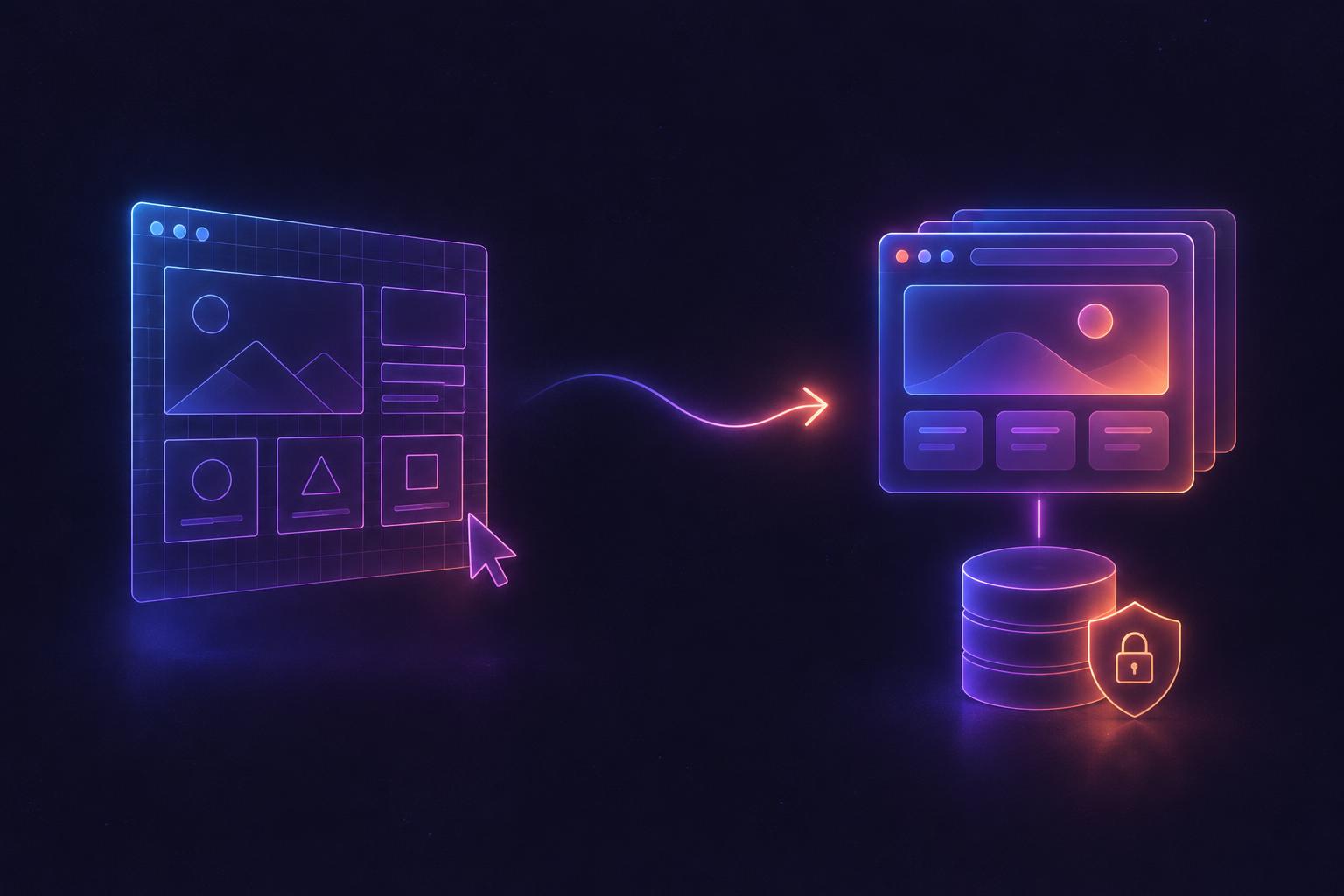
Cline and Lovable both use AI to build software. That's roughly where the similarities end. One is an IDE extension that helps developers modify code they already have. The other generates entire applications from a conversation: frontend, backend, database, and deployment included. This article breaks down how each tool actually works, who it's built for, and which one fits your workflow so you can stop comparing marketing pages and start building.
The Cline vs Lovable question comes up often, but it's less about which is "better" and more about which matches where you are right now: do you already have a codebase, or are you starting from zero?
What Is Cline?
Cline is an open-source AI coding agent that lives inside your existing development environment, primarily VS Code, with support for JetBrains IDEs and a command-line interface.
It doesn't create projects from scratch. Instead, it reads your existing codebase, proposes specific changes, and executes terminal commands with your permission every step of the way. The official Cline documentation states that the tool runs within your IDE using the VS Code extension API, with no code sent to Cline's servers when you supply your own API keys.
Cline operates in two modes. Plan Mode is for planning: it analyzes your project structure, reads files, and formulates an approach before any modifications happen. Act Mode is where changes happen: file edits, terminal commands, new directories, and more, with approval gates so you can review what Cline intends to do before it does it. You see a diff comparison showing exactly what changes before anything gets written. Cline's Plan & Act documentation describes this human-in-the-loop design as a key reason it can be used safely in real development workflows.
On the AI side, Cline is model-agnostic. Cline's documentation lists support for Anthropic Claude, OpenAI GPT-4, Google Gemini, Mistral, and local models through Ollama. You can bring your own API keys and pay providers directly per token, or use Cline's own centrally-billed inference credits at no markup. Cline's pricing page notes that the core tool is free and open-source under the Apache 2.0 license. Team features are listed at $20 per user/month starting after Q1 2026, with the first 10 seats permanently free.
The target user here is clear: developers who want control, transparency, and model flexibility inside their existing workflow. If you're comfortable in VS Code, understand diffs, and can configure API keys, Cline gives you a capable AI partner without giving up decision-making power.
What Is Lovable?
We built Lovable as an AI app builder for developers and non-developers—the conviction behind it is simple: the gap between having an idea and having a real product shouldn't require learning to code or handing your vision to someone else. You get complete full-stack applications from natural language descriptions: a React frontend, Supabase backend, authentication, and one-click deployment.
If you like iterating through conversation and fast UI tweaks, Lovable also leans into vibe coding as a practical way to go from idea to working software.
There's no local environment to set up. No IDE to install. No packages to configure. You open a browser, describe what you want to build, and you get a working application. You get real, exportable React/TypeScript code with full Supabase integration for database management, real-time data, file storage, and serverless functions—not a proprietary format locked to our servers.
There are three ways to work inside Lovable. Plan Mode is an interactive planning interface for discussing architecture, debugging, and reasoning through multi-step problems before touching code. Agent Mode—Autonomous AI development with independent codebase exploration, proactive debugging, real-time web search, and automated problem-solving. Visual Edits—Direct UI manipulation that lets you click and modify interface elements in real-time without writing prompts.
If you want to own and extend your code, GitHub sync gives you bidirectional synchronization with complete source code export and the full capabilities of your connected GitHub repository. You can eject at any time and continue development in any environment.
Pricing starts free. Our pricing page lists a Free tier with basic access and limited AI services. The Pro plan starts at $25/month (annual billing) with 100 base credits per month plus 5 daily bonus credits. The Business plan is $50/month and adds SSO, restricted projects, data opt-out, and design templates.
If you want a faster starting point, Lovable's templates give you a production-ready foundation, complete with frontend, backend, authentication, and deployment infrastructure, that you can customize through Visual Edits or conversation.
Cline vs Lovable: Head-to-Head Comparison
Starting Point and Setup
This is the most important structural difference between the two tools: Cline assumes a project already exists, and Lovable creates it.
Cline works inside an existing codebase. You open your project in VS Code, and Cline reads the file structure, understands dependencies, and proposes targeted changes. It's built for iteration, not creation. In general, Cline is strongest when you already have a repository and want to change it safely and deliberately.
Lovable starts from an empty canvas. You describe your application in plain English, and it generates the full stack: components, database schemas, authentication flows, and routing. For someone with an idea but no codebase, this is the faster path. Many teams use tools like this to get to a functional MVP in days rather than weeks.
Edge: Lovable, if you're starting from zero. Cline, if you already have code.
Control and Transparency
Cline gives developers more granular control over every change, and it's not close.
Every file edit and terminal command in Cline comes with approval gates so you can review the proposed change before anything executes. You see the exact diff before anything changes. The Plan & Act workflow separates reasoning from execution, so you can review Cline's thinking before it touches a single file. For teams working in regulated codebases or production environments where unwanted changes are costly, this matters.
Lovable's Agent Mode acts more autonomously by design. That said, you can monitor execution, pause tasks, and revert changes. For many builds, especially early prototypes, this balance of autonomy and oversight moves projects forward without constant interruption.
Edge: Cline, for developers who need audit trails and step-by-step approval. Lovable, for builders who want progress without micromanaging every file change.
Backend and Deployment
Cline generates code, but databases, authentication, and hosting are still on you. Lovable ships with all of it.
With Cline, you manually select and provision your database, configure authentication using libraries like Passport.js or Auth0, choose a hosting provider, and set up deployment pipelines. Cline's GitHub repository positions it as a coding assistant, not an infrastructure provider. Experienced developers may prefer this. They already have infrastructure preferences and want full control over their stack.
Lovable's Supabase integration handles database provisioning, schema generation, and real-time data automatically. Authentication supports email/password, Google, GitHub, and enterprise SSO through Supabase Auth. Deployment is one click, with built-in SSL, custom domains, and support for external platforms like Netlify and Vercel as described in the deployment documentation. The Supabase blog highlights that this integration removes the need for manual database configuration.
Edge: Lovable, for anyone who wants a working backend without configuring it themselves. Cline, for developers with specific infrastructure requirements.
Pricing Model and Cost Predictability
Lovable's subscription is more predictable. Cline's usage-based model can be cheaper, or much more expensive, depending on how you use it.
Cline is free to install and open-source, but you pay for AI inference. You can bring your own API keys and pay providers directly per token, or use Cline's centrally-billed credits. Costs vary by model and session depth. Long sessions with premium models can add up quickly, and it's hard to predict in advance if you don't already track usage closely.
Lovable's Pro plan is $25/month with a credit system. You get 100 base credits monthly plus 5 daily bonus credits, with unused credits rolling over. The plans and credits documentation also describes on-demand top-ups if you exceed your allocation. The cost is predictable, which matters for budgeting monthly expenses.
Edge: Lovable, for cost predictability. Cline, for developers who use it sparingly and want to avoid subscriptions. Always verify current pricing on Cline's pricing page and Lovable's pricing page.
Who It's Actually For
Cline is built for developers, while Lovable is built for developers and non-developers. This isn't a soft distinction.
Using Cline requires VS Code proficiency, the ability to read and evaluate diffs, comfort configuring API keys from providers like Anthropic or OpenAI, and familiarity with terminal commands. These are real barriers for anyone outside professional development.
Lovable works in a browser. Founders can describe what they want in plain English and get a working application. Developers get clean React/TypeScript output they can export via GitHub and extend in any IDE. Visual Edits make UI adjustments accessible to anyone who can click and drag, and Agent Mode handles multi-file changes for both audiences.
Edge: Lovable, for accessibility across skill levels. Cline, if your entire team already lives in VS Code.
When to Use Which Tool
Here are four common scenarios with a clear recommendation for each:
You want an MVP running by end of day, and you don't have a codebase yet. Use Lovable. Describe your application, let Agent Mode build it, and publish with one click. No local setup and no infrastructure configuration.
You work at a tech company and need an interactive prototype for stakeholder review without waiting for engineering. Use Lovable. Product managers and designers can build working prototypes in hours through natural language prompts and Visual Edits, without waiting on an engineering backlog.
You're a developer adding features to an existing production codebase and want AI assistance with full code visibility. Use Cline. Its Plan Mode lets you explore the codebase safely, and Act Mode gives you precise, reviewable diffs before any change hits your files.
You built your initial application in Lovable and need to add complex custom logic that exceeds what prompts handle cleanly. Export via GitHub sync, then continue in Cline or your preferred IDE. Lovable's React/TypeScript output is standard, readable code, not a proprietary format you're locked into.
Both tools are genuinely good at what they do. Cline excels at developer-controlled refinement of existing code. Lovable excels at creation speed and accessibility for anyone with an idea.
The Verdict: Cline vs Lovable
The answer depends on where you are in the build process, not which tool is universally better.
Builders starting from zero, especially those without an existing codebase, get to a working, deployed product faster with Lovable. The entire stack is handled: frontend, backend, authentication, and hosting. Developers iterating on existing codebases get more control and transparency with Cline. Its approval workflow and model flexibility make it a strong AI partner inside an established project.
Many builders end up using both. Lovable gets something real in front of users fast. Cline (or another IDE tool) helps refine and extend once the project matures.
The clearest signal: if you don't have a project yet, start with Lovable.
If you're at the starting line—an idea for a client portal, a SaaS prototype to test with early users, or an internal tool that saves your team hours every week—try Lovable and go from description to a live application without configuring a single piece of infrastructure. Or explore Lovable's templates for a production-ready foundation you can customize through conversation or Visual Edits.
Pricing and product feature information in this article reflects what was publicly available as of March 2026. Both Cline and Lovable update their plans, pricing models, and capabilities regularly. Before making a decision, verify current pricing and features directly on the Cline and Lovable websites, as well as each platform's official documentation.