Campaigns launch faster from a single command center: Marketing ops consolidated seven disconnected tools into a Marketing Command Center that cut campaign setup from one week to 30 minutes.
Real-time market feedback and competitive radar: A 24/7 AI listening tool from the social team and a Competitive Pulse app from product marketing have armed sales, support, product, and leadership with live market intelligence.
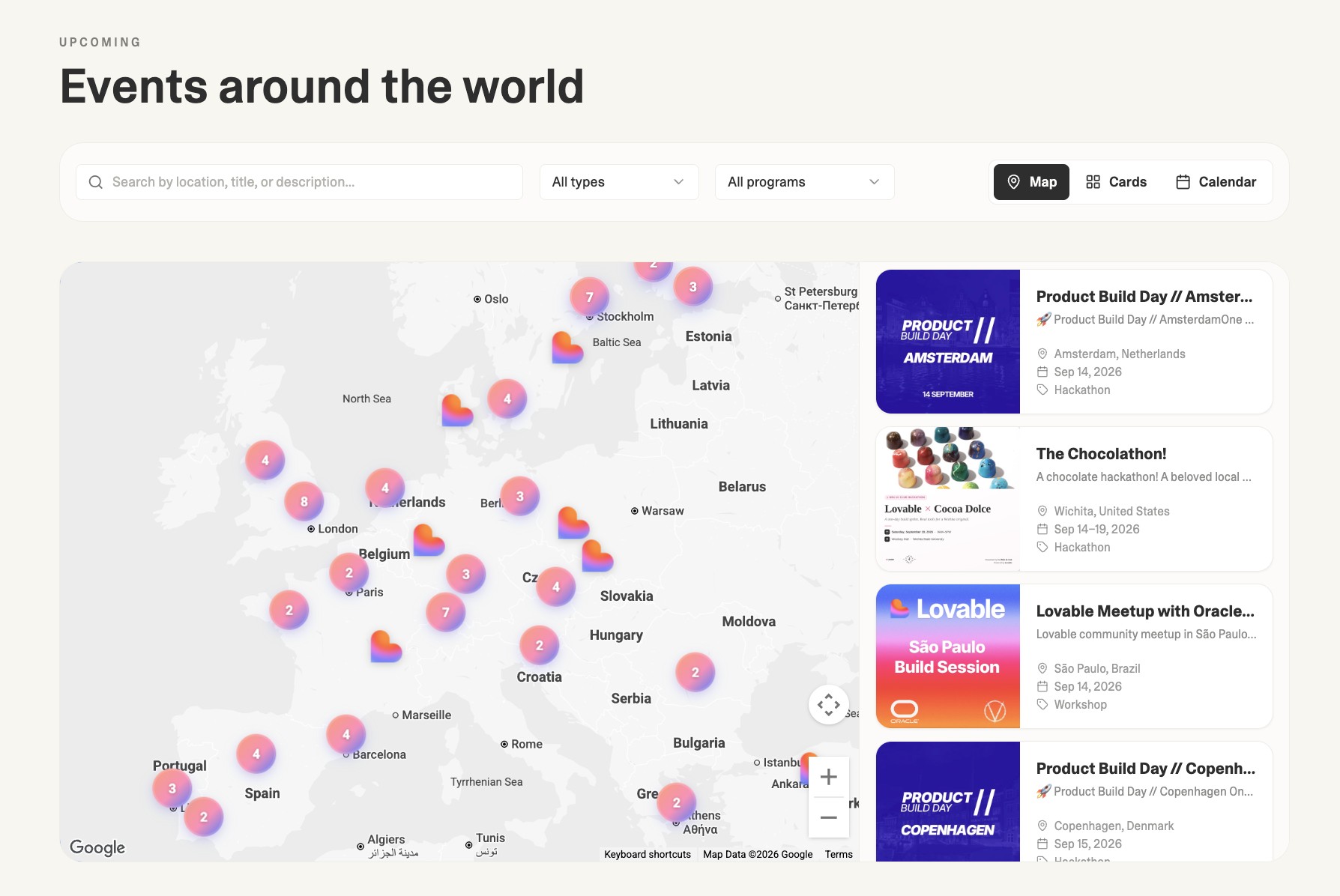
Global community mobilized as brand advocates: Community ops built an events hub to manage 200+ monthly meetups and spin up a 60-event series in two days, while brand marketing deployed an MCP-connected Brand Hub to keep everyone on brand.
Most marketing teams work around quarterly planning cycles. At Lovable, the marketing team operates on a completely different clock. Campaigns go from initial brainstorms to live, measurable launches in days.
The secret is not a massive agency retainer or an oversized ops headcount. Instead, whenever a marketer hits a roadblock, they simply build the solution themselves.
“Working for an AI-native company who ships features and products in days, our speed to market in marketing needs to match that and we don’t have the luxury to wait on other teams or lagging tools to ship,” says Kali Lorenzetti, Head of B2B Marketing at Lovable.
Here is how Lovable’s marketing team rebuilt their entire operating model across the full campaign lifecycle, from idea and launch to performance tracking and community-driven amplification.
Ideate, build, and launch: Enable self-serve operations
Until recently, running a new campaign meant standing in a queue. If a growth marketer wanted to launch a targeted campaign, build an audience segment, generate clean UTM links, or import a fresh list of event leads into its CRM, they had to route the request through marketing operations.
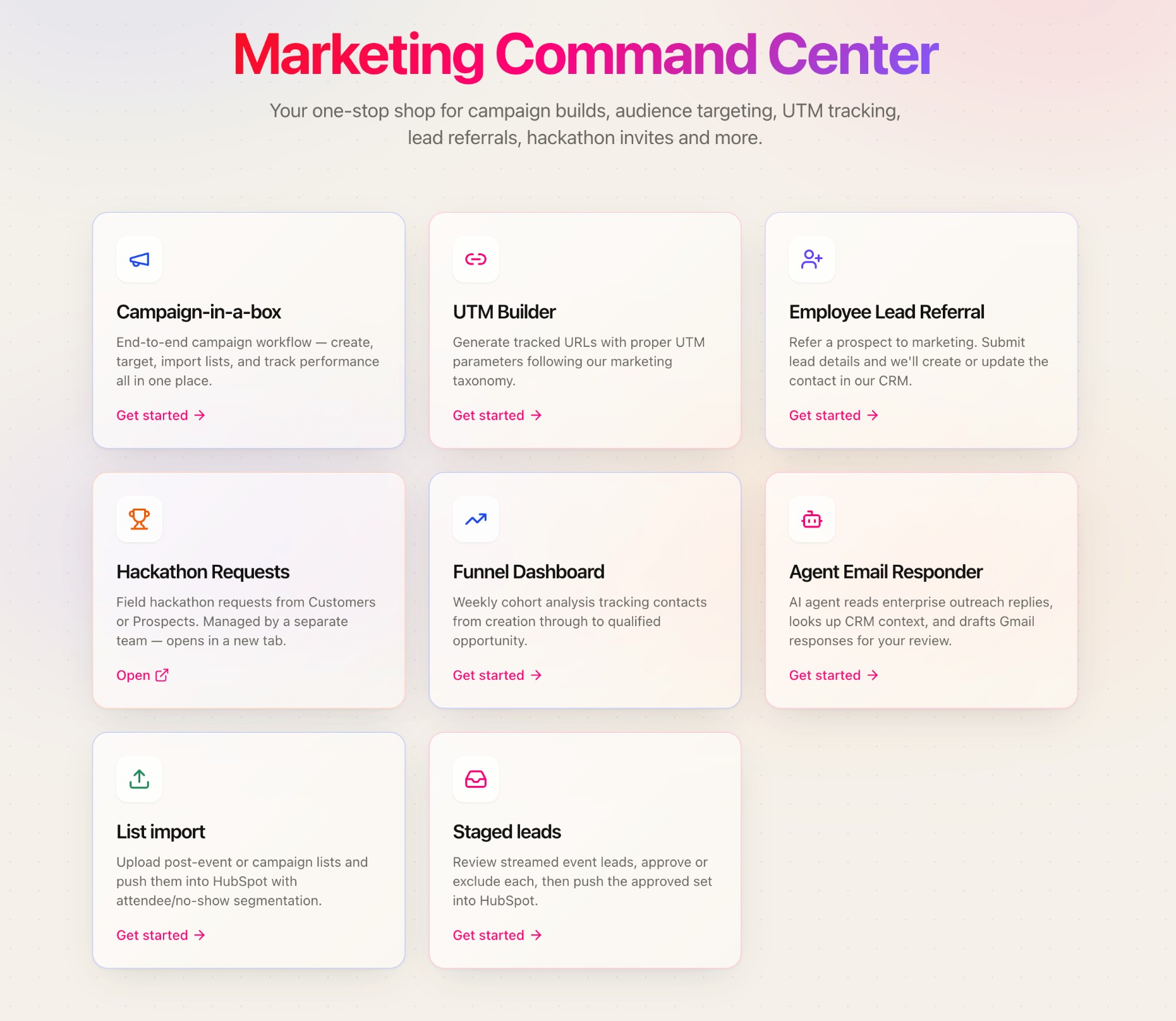
Lovable marketing ops team member Bri Murphy saw requests piling up and decided to eliminate the queue altogether. Using Lovable, she built the Marketing Command Center, a unified, self-serve internal hub that integrates directly with Lovable’s CRM and data warehouse to manage full-funnel data.
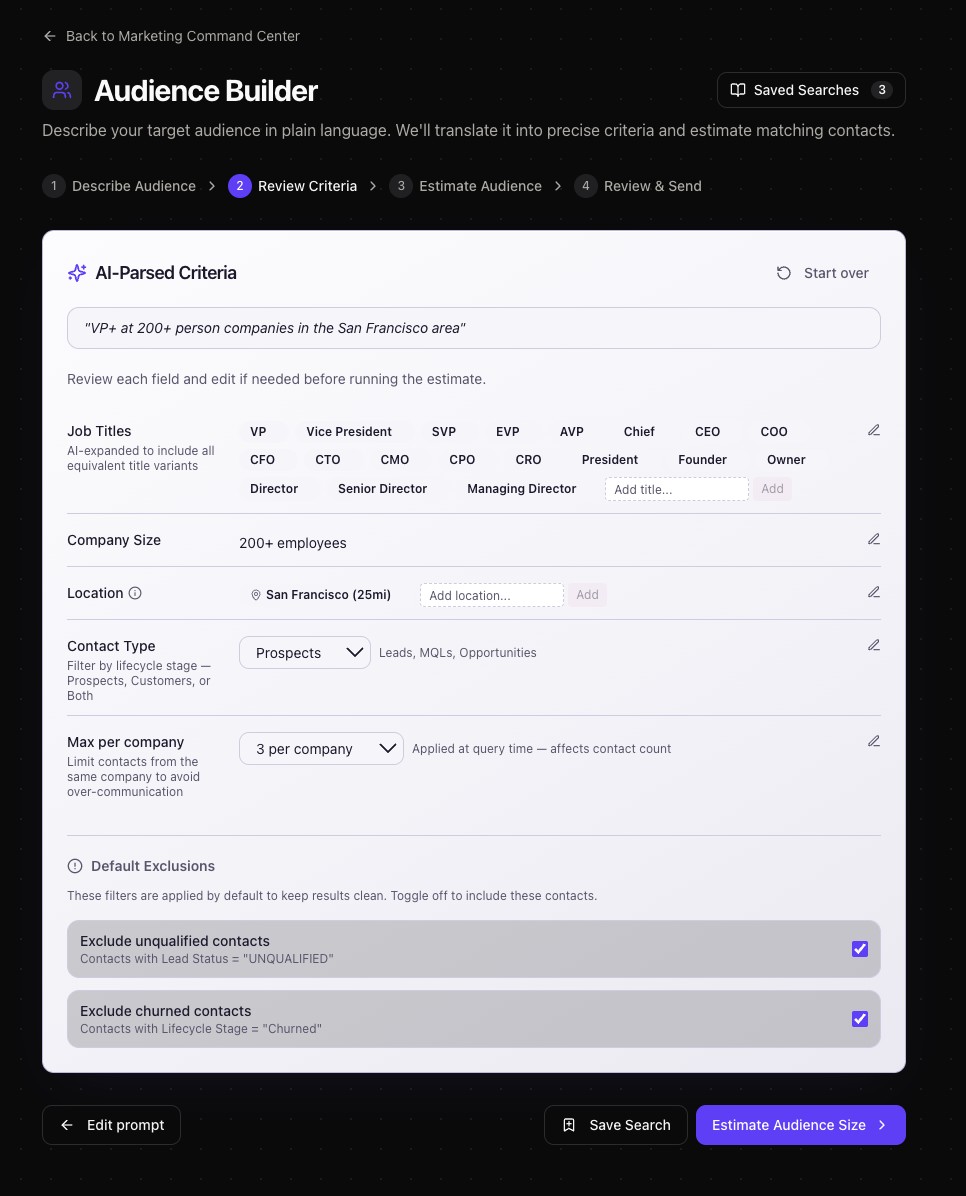
Within the portal, any marketer can generate tracked campaign links, build verified audience lists, route inbound requests, submit lead referrals, and track deal-source attribution through a dedicated agent. The tool replaced a maze of manual spreadsheets and seven disconnected point solutions, giving the team time back and saving hundreds of thousands of dollars every year.
"Every tile in the Command Center represents a separate tool login or a ticket logged with another team," says Bri. "Now, anyone in marketing can spin up an audience, configure attribution, and publish tracking in minutes without waiting on me. It transformed our role from gatekeepers into enablers."
A workflow that previously demanded a week of turnaround time and dedicated data engineering support now takes a demand generation lead 30 minutes. Freeing the team from coordination drag changed how marketing dollars are spent. Instead of sinking the budget into operational overhead and seat licenses, resources stay focused on creative strategy and distribution.
“As a marketing leader, it has unlocked the pace and volume of marketing we put in market,” says Kali. “We focus on scoping great ideas and have Lovable do the tedium of execution.”
Track: Turn signals into proactive iteration
Shipping campaigns fast only works if the team can see results fast, too. Rather than relying on static reporting decks, manual audits, or disconnected social alerts, Lovable built custom tracking engines to capture market feedback the moment a campaign goes live.
The first line of defense is Lovable’s custom built social listening and triage system. Before, brand sentiment and customer feedback were scattered across Reddit threads, LinkedIn posts, and X mentions. If a user flagged an edge-case bug during a product announcement, the post could sit unaddressed for hours or days, creating a bad experience for users and risking negative brand perception.
Lovable’s social listening tool closes that gap by combining Sprout Social and Octolens for public web monitoring with an LLM triage layer. The app scans public channels around the clock, then cross-references incoming mentions against live incident channels, Intercom customer conversations, and internal playbooks. It’s integrated into Slack with custom alerts, so employees can stay up to date on social buzz specific to their product launches, audiences, and announcements and tailor their work accordingly.
And the social listening tool functions as an interactive agent rather than a passive news feed: Teammates can reply directly in the thread to ask for context, review supporting evidence, and verify root causes in real time.
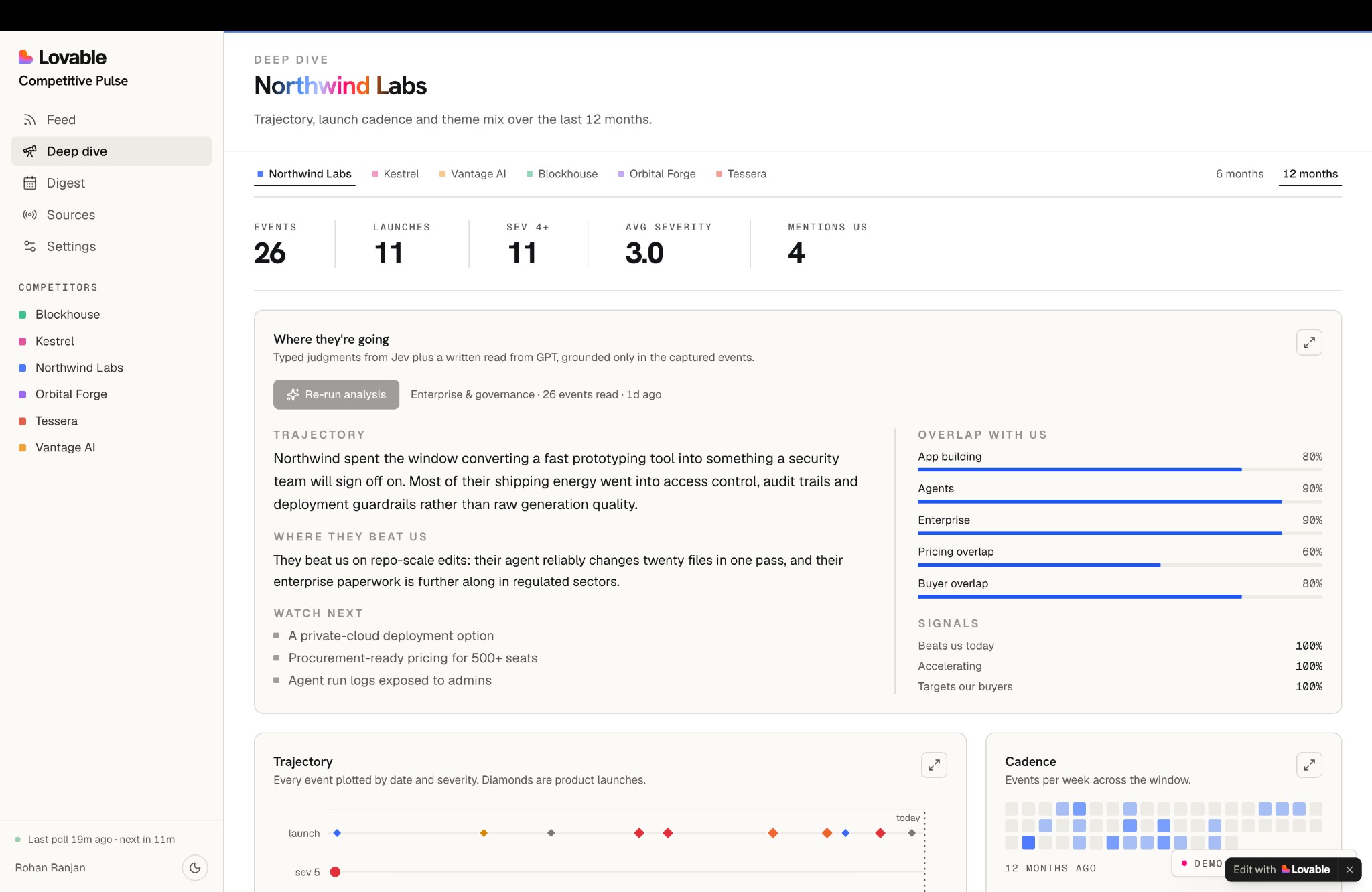
In addition to social sentiment, the marketing team needed a systematic way to track competitor news. Product marketer Rohan Ranjan built Competitive Pulse, a Lovable-native intelligence feed that monitors competitor launches, pricing shifts, and messaging themes. It started as a way for product marketing to tailor messaging and launch strategies, but it’s quickly become an essential tool across the company: by sales to win competitive deals, by product to shape the roadmap, and by leadership to spot broader market shifts.
"Before Competitive Pulse, competitive intelligence was completely reactive," says Rohan. "Someone would notice a blog post or an ad copy change right in the middle of a high-stakes enterprise sales cycle, and we would scramble to pull together positioning notes. We built Competitive Pulse to give the entire company a live, centralized radar of the market."
Updates are pushed to Slack and fed directly into Company Brain, an internal Lovable agent that surfaces answers to all kinds of questions about the company, product, or the market.
Amplify: Make everyone an on-brand advocate
The final piece of Lovable’s marketing strategy is empowering its vibrant community of customers, partners, and ambassadors to be vocal advocates.
With requests for local events surging, Saga Vigre Bohinen, who manages community operations, knew the intake process had to change. Historically, the team’s ability to approve an event came down to how fast they could navigate between five disconnected platforms for ticketing, approvals, and attendee feedback.
To streamline the workflow, Saga built the Community Events Base. The portal handles host applications, event listings, attendee registration, and post-event surveys, all in one place. Lovable’s community operations team now run more than 200 in-person and virtual events each month across dozens of countries, while sustaining a 4.6 out of 5 attendee rating. That newfound agility showed when the team launched a new event series for founders in just two days, spinning up 60 events across 29 countries that drew 3,800 attendees.
But giving customers, employees, and partners the power to be brand ambassadors introduces a classic challenge: protecting brand integrity without slowing down advocacy. When hundreds of community organizers, partners, and internal teammates are creating collateral, out-of-date logos, inconsistent typography, and inaccurate brand colors seem inevitable.
To solve this, the team shipped an operating system for brand enablement, the Brand Hub. Built as a living Lovable application, it provides gated access to approved logos, color palettes, typography, and voice guidelines for different user groups, from internal employees to partners and vendors. Now everyone, both inside and outside the company, can ship fast while staying on brand.
Crucially, the Brand Hub offers more than just static downloads. Chat with the agent in the app and it will edit slide decks, blog posts, and campaign collateral to be in the brand voice, or deliver a logo sized for a particular asset. The Brand Hub is agent-ready, too. Using the Lovable MCP, teammates can pull the brand voice and approved assets from Claude, ChatGPT, or another AI assistant.
“Most brand request queues are littered with basic tasks – review this copy, where can I find the font, resize the logo for me,” said Heather MacKinnon, Head of Brand Marketing at Lovable. “The tasks pile up and everyone is slowed down. With the Brand Hub, anyone, internal or external, can self-serve on-brand assets in seconds.”
50+ custom marketing apps (and counting)
With Lovable’s product team shipping new features almost daily, the marketing team has to move just as fast to keep customers in the know. Letting marketers build their own software collapses the gap between planning campaigns and getting them out the door. There’s no more wait for permission or developer resources. Instead, brand designers, ops managers, and product marketers use Lovable and their own expertise to build the exact workflows they need.
“If you can picture it, you can build it,” says Kali. “Domain experts are now in the driver’s seat.”

 Kali LorenzettiHead of B2B Marketing
 Bri MurphyMarketing Ops
 Rohan RanjanSolutions Marketing Lead
 Saga Vigre BohinenCommunity Operations
 Heather MacKinnonHead of Brand Marketing